|
Norway
In Norway we visited five farms and two research-station. Two of the farms were organic farms with milk and meat production. One of this two had an old breed called (STN) sida trønder- og nordlandsfe. The other farms had mostly (NRF) Norwegian red cattle, which is the most common breed in Norway.
Norwegian agriculture is important for more than just producing food, it provides important need of workers, and helps the village areas to hold on to the population. Without the farming the village areas would be deserted.
Soil
In Norway only 3% of the total area is used for farming, 44% is mountains, 38% is forest, 7% is fresh water or ice and 6% is swamp. Some places in Norway it is moraine soil which is from the ice age.
Roughage
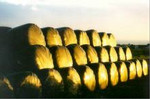
The grazing season in Norway is short, so most of the grass has to be preserved, stored and fed during the winter. Most of the roughage is made in silage, but there is also some hey. The silage is mostly in round bales, but also a lot in silos. Round bales is very common in Norway because there are many small farms who can’t afford to build an silo, and they don’t use so much roughage so if they have a big silo the silage would be bad before they could use it al, so they make round bales instead. Usually the farmers get tow or three cuts per year, some more or less, it depends on were in the country the fields are.
Corn is not common to grow in Norway, is easily freezes in spring when it is planted out. Grain is mostly grown in the east farts of Norway around Mjøsa and near Oslo. In this part of the country most of the potatoes and vegetables are grown to. But this crops are also grown in other parts of the country were the climate allows it.
Page updated 10.4.2006 |