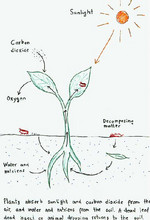
nutrient cycle | |
Minerals
Nitrogen (N) is part of all living cells and is a necessary part of all proteins, enzymes and metabolic processes involved in the synthesis and transfer of energy. Nitrogen is a part of chlorophyll, the green pigment of the plant that is responsible for photosynthesis, helps plants with rapid growth, increasing seed and fruit production and improving the quality of leaf and forage crops. Nitrogen often comes from fertilizer application and from the air (legumes get their N from the atmosphere, water or rainfall contributes very little nitrogen).
Phosphorus (P) is important for a cow to produce milk, for bones, for energy metabolism and for fertility. For a plant it is important for proper root growth, formation of seeds and fruit and for the survival and growth of seedlings. It affects rapid growth. A good soil- structure is important for how much P is accessible to a plant and how much a plant actually takes up. Phosphorus often comes from fertilizer, bone meal, and Hypophosphate.
Potassium (K) is important for the plants to build a lot of cellulose, for the root growth and is needed to give maximum amounts of sugars and fructose in the tops and stubbles. It helps in the building of protein, photosynthesis, fruit quality and reduction of diseases. Potassium is supplied to plants by soil minerals, organic materials, and fertilizer.
Page updated 17.5.2006 |


